2026 Best Guide Why Are Some Food Additives Banned in Bread?

Time:2026-09-27 Author:Aria
0%

Why are some food additives banned in bread? The answer depends on the ingredient, its purpose, and the rules in a particular market. Regulators may restrict an additive when evidence raises safety concerns, when its use exceeds permitted conditions, or when it no longer meets local standards. A decision in one country does not automatically apply everywhere.

Bread additives can help dough rise evenly, stay soft, or maintain a consistent texture. Others may be used to preserve freshness or improve processing. These functions can sound technical, but their effects are visible: a uniform crumb, a longer-lasting loaf, or dough that handles more predictably. Still, an additive’s presence alone does not prove that a bread is unsafe. Dose and intended use matter.

The boundary is not always obvious. Ingredient names can look unfamiliar, and headlines may treat a restriction as proof of harm. That shortcut can mislead. This guide explains how food-safety reviews work, why rules differ, and how to read bread labels without assuming every additive carries the same risk. It also distinguishes a legal restriction from a voluntary recipe change, since bakeries may reformulate products for taste, customer preference, or supply reasons. Some explanations remain uncertain or depend on changing evidence, so a careful answer should acknowledge that. Readers will find practical context, not a promise that every loaf fits one simple category.
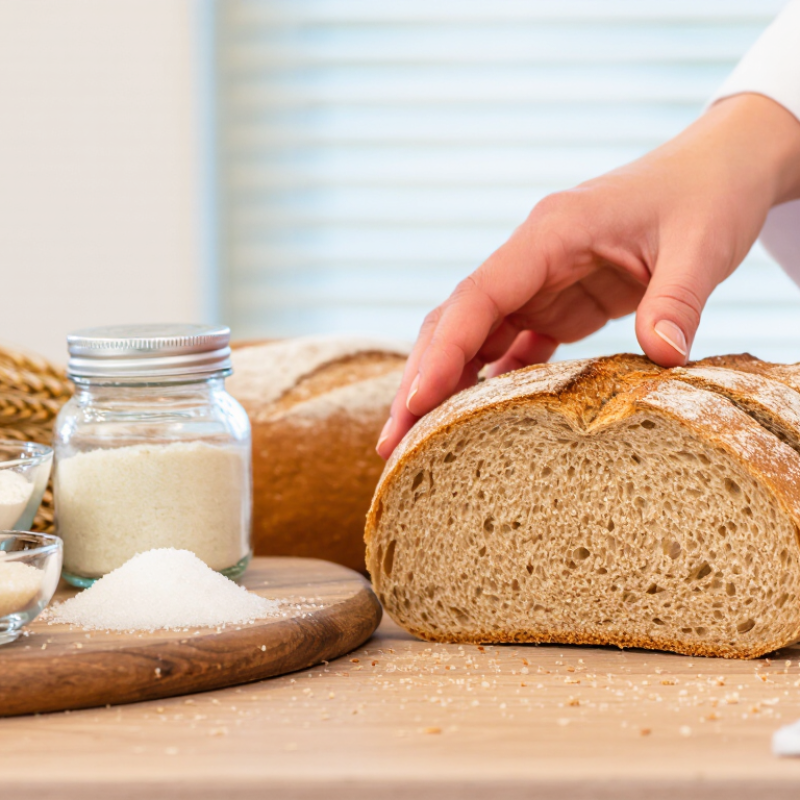
2026 Best Guide Why Are Some Food Additives Banned in Bread?

What Food Additives Do in Bread

Food additives can shape bread long before it reaches the oven. Dough conditioners help flour proteins form a stronger network, so dough stretches without tearing. Emulsifiers help water and fat mix more evenly, which can create a softer crumb. Enzymes adjust how starches and sugars behave during mixing and baking. Ascorbic acid can strengthen dough and support a more consistent loaf. Small changes matter.

These ingredients can also help bread stay soft or resist mold for longer, depending on the recipe and storage conditions. A loaf that remains tender for several days may rely on more than its flour and baking method. At home, I notice that bread without conditioners can feel denser by the next morning, though flour and handling make a difference too.

Preservatives are not a substitute for clean production or proper storage. They have a specific job. I sometimes wonder whether a longer shelf life is worth a change in texture or ingredient list. The answer may depend on how the bread is used, and on what a baker wants from each loaf.

How Food Additives Are Evaluated for Safety

Food-additive safety is assessed by examining both hazard and exposure. Experts review toxicology studies, the amount used in food, and how much people may consume across their diets. The EFSA re-evaluation programme reported completing assessments of 315 food additives by 2020. That work can prompt updated specifications, use limits, or further data requests. A chemical’s presence alone does not prove harm. Dose matters.

JECFA, the joint FAO/WHO expert committee, uses available evidence to establish acceptable daily intakes when the data support them. Assessors often apply a 100-fold uncertainty factor to animal-study findings, allowing for differences between animals and people, and among people. Regulators also consider exposure from multiple foods, not just one slice of bread. Real diets vary. That is reassuring, but not a magic shield. If evidence is incomplete, authorities may request more studies or revise permitted uses. For bread makers, this means an additive’s function must be weighed against exposure estimates and current evidence; a familiar ingredient still deserves careful review. Sources: EFSA’s food-additive re-evaluation programme; FAO/WHO JECFA guidance on acceptable daily intakes.

2026 Best Guide: Why Are Some Food Additives Banned in Bread? — How Food Additives Are Evaluated for Safety

An additive may be prohibited in one country but permitted under limits in another. Regulators assess both the substance’s hazards and the amount people are likely to consume; a safety concern does not automatically mean an additive is banned everywhere.

Additive Why It Has Been Used in Bread Regulatory Snapshot Safety Issue Considered What the Evaluation Involves Practical Takeaway
Potassium bromate
Flour-treatment agent and dough strengthener
Can strengthen dough and help produce a consistent loaf during baking.
  • United States: Federally permitted for specified uses and limits under food-additive regulations; it is not a nationwide federal ban.
  • European Union and United Kingdom: Not authorized for use as a bread-making additive.
  • Canada: Not permitted as a food additive in bread.
Animal studies have raised concern about potential carcinogenic effects. Regulators also consider whether residues may remain in finished food when baking is incomplete or use is not properly controlled. Assessments consider toxicology, expected dietary exposure, permitted use levels, manufacturing controls, and how much of the substance or its residues may remain after baking. A restriction can reflect a regulator’s decision that the substance is not acceptable for food use under its rules—not a finding that every exposure causes harm.
Azodicarbonamide (ADA)
Flour bleaching and dough-conditioning agent
Can be used to condition flour and improve dough handling in commercial baking.
  • United States: Permitted for use in flour under specified conditions, with a maximum level of 45 parts per million in flour.
  • European Union and United Kingdom: Not authorized as a food additive for bread.
  • Canada: Not permitted for use as a food additive in bread.
Evaluations consider toxicological findings and potential exposure to the additive or substances formed during processing. Authorization depends on the evidence and legal standards applied in each jurisdiction. Authorities review toxicology data, estimated intake from food, proposed use levels, processing conditions, and whether the available evidence supports a safe level of use. Its use in some countries does not mean it is approved worldwide. Ingredient and additive rules differ by market.
Other dough conditioners and emulsifiers
Examples include ascorbic acid and lecithins
May help with dough handling, loaf volume, texture, or consistency. Many are authorized for specified foods and uses in multiple jurisdictions, but permitted additives, maximum levels, and labeling rules vary. They should not be treated as one single regulatory group. Each substance is assessed individually. The relevant question is not simply whether an additive is “natural” or “synthetic,” but whether its intended use and likely exposure meet the applicable safety standard. Review can include identity and purity, toxicological studies, dietary exposure estimates, vulnerable population considerations, and evidence about effects during food processing. Check the ingredient list and the rules that apply where the bread is sold. The presence of an additive does not, by itself, establish that the product is unsafe.
Any food additive under review
General safety-evaluation process
Additives may serve functions such as preserving freshness, improving texture, or supporting consistent production. Regulators may authorize an additive for particular foods and conditions, set limits, require labeling, restrict it, or decline to authorize it. Decisions can differ across countries and can change as evidence or rules are updated. Potential hazards, the amount consumed, frequency of exposure, uncertainty in the evidence, and possible effects on different groups are considered together.
  • Identify the substance and proposed technological purpose.
  • Review toxicology and other relevant scientific evidence.
  • Estimate exposure from the diet and proposed use levels.
  • Consider processing, residues, and whether the use is necessary and controlled.
  • Reassess the decision when new evidence becomes available.
“Banned” can mean not authorized for a particular use in a particular jurisdiction. It does not necessarily mean the additive is prohibited in every country or in every type of food.

Important: This table is a general regulatory overview, not medical advice. Rules may change, and national, regional, or state requirements may differ. Check current official regulations for the country where a bread product is made or sold.

Official references: U.S. regulation for potassium bromate | U.S. regulation for azodicarbonamide | European Commission food-additive legislation | Health Canada information on food additives

Why Some Bread Additives Are Banned or Restricted

Why some bread additives are banned or restricted often comes down to how they behave during processing and what remains afterward. Potassium bromate, for example, strengthens dough and can help loaves rise evenly. But regulators assess both its technical benefit and potential health risks. EFSA’s 2016 re-evaluation found genotoxicity concerns and concluded that potassium bromate was not suitable for use as a food additive. IARC’s Monographs, Volume 73, classified it as Group 2B, meaning “possibly carcinogenic to humans.” That classification signals a hazard, not a measured risk from eating a particular slice of bread.

Rules can differ because agencies weigh evidence, exposure estimates, and uncertainty differently. Some additives are restricted by maximum-use levels; others are not permitted for particular uses. The practical question is not just whether an ingredient appears in a recipe, but how much is used and whether processing leaves residues. Small details matter.

A baker may notice the result as a springier dough or a more uniform crumb. That does not settle the safety question. The boundary can feel untidy: a useful processing aid may still raise concerns when evidence points to possible harm. EFSA’s report is a useful example of how regulators review those trade-offs, while IARC’s classification helps explain why hazard findings should not be mistaken for a direct estimate of everyday dietary risk.

How Additive Rules Vary Across Countries

A bread additive can be acceptable in one country and unavailable in another. Rules depend on national food standards, permitted uses, and maximum levels—not just an ingredient’s name. For example, US regulations permit limited use of azodicarbonamide as a flour treatment agent, while it is not authorized for food use in the European Union. Potassium bromate is another example: it remains permitted under specific conditions in some jurisdictions but is not authorized as a food additive in the EU. Rules differ.

These decisions reflect differing assessments of exposure, processing, and potential health effects. Regulators may also consider whether safer or more practical alternatives are available. A loaf baked for one market may therefore use a different flour improver from a similar loaf sold elsewhere. Check the ingredient list. Labels and approved additive lists can help explain what is present, though names and numbering systems vary.

For bakers and shoppers, “banned” can be an imprecise word. An additive may be prohibited, restricted to certain foods, or allowed only below a set limit. Imported products must meet the destination country’s requirements, so recipes can change between markets. Regulations also get reviewed, and a rule may lag behind new evidence. That deserves scrutiny. A small difference in dough strength or shelf life can matter to a bakery, but it does not by itself establish that an additive is necessary or safe at every level.

How Bread Recipes and Labels Change After a Ban

When a food additive is banned, bread recipes often change in quiet but noticeable ways. A dough may need more water, longer mixing, or extra fermentation time. Texture can become denser, while the crust may brown differently. Shelf life may also shorten because the original additive supported softness, stability, or mold control. A ban does not always mean the ingredient was immediately dangerous. It may reflect new safety evidence, exposure estimates, or stricter regional standards.

Labels change with the formula. The removed additive disappears from the ingredient list, and its function may be replaced by processing changes or permitted alternatives. Some labels become shorter. Others gain familiar ingredients, such as flour treatments, fibers, or acidity regulators. Names and requirements vary by country, so official food authority guidance remains essential. In practical bakery testing, the first replacement loaf can look acceptable but stale by the next morning. That result deserves a second test, not a quick conclusion.

Tips: Compare old and new labels side by side. Check serving size, storage advice, and the full ingredient list. Look for changes in softness, aroma, and crumb after 24 hours. Home bakers can reduce uncertainty by weighing ingredients carefully and recording proofing time. Small changes matter. A recipe that worked before may need patience, not guesswork. Manufacturers should also explain reformulation clearly, because vague wording can leave shoppers confused about what actually changed.

FAQS

How is a food additive’s safety assessed?

Experts review toxicology studies, permitted amounts, and likely dietary exposure. Dose matters.

Does finding an additive in food prove it is harmful?

No. Presence alone does not establish harm; the amount consumed also matters.

Why do assessors consider a person’s whole diet?

People may consume the same additive in several foods, not just one slice of bread. Real diets vary.

What is an acceptable daily intake?

It is an estimated amount considered safe to consume daily over a lifetime, based on available evidence.

Why might animal-study results include a safety factor?

Assessors may apply a 100-fold uncertainty factor to account for differences between animals and people, and among people. It is cautious, not perfect.

Can additive rules differ between countries?

Yes. Permitted foods, use levels, and national standards can differ. Rules differ.

How can shoppers check what an additive does?

Read the ingredient list and consult approved-additive information for the product’s market. Labels help, but names and numbering can vary.

Can a food additive’s permitted use change?

Yes. Authorities may revise limits, request more studies, or change permitted uses as evidence develops. That sounds tidy, but reviews can take time.

Does a longer shelf life prove an additive is necessary?

No. A small change in shelf life or dough texture does not prove necessity or safety at every level. The details matter.

Conclusion

Bread additives can serve several practical purposes: they may improve texture, support dough structure, extend freshness, control acidity, or help ingredients mix consistently. However, each additive must be evaluated for factors such as toxicity, acceptable intake levels, effects on sensitive groups, and how it behaves during baking and storage. This process helps authorities decide whether an ingredient is safe for its intended use and amount.

The question “why are some food additives banned in bread” usually involves new safety evidence, unsuitable exposure levels, misleading use, or the availability of safer alternatives. Rules can differ across countries because regulators may interpret scientific data differently or set different standards for food production. When an additive is banned or restricted, bakers may adjust recipes, replace it with approved ingredients, change processing methods, and update labels. These changes can affect texture, shelf life, ingredient lists, and consumer expectations while maintaining clear and responsible food information.

Aria

Aria

Aria is a dedicated marketing professional with a deep passion for innovative strategies and a keen understanding of our company's product offerings. With a wealth of experience in the industry, Aria excels at crafting engaging content that highlights the unique features and benefits of our......